Lessons from a year of food pantries
TMBy Tariq M.
Our Saturday food pantry has been running weekly for a year. By the numbers, we packed and distributed roughly 2,800 grocery boxes over fifty-two Saturdays, served an average of 54 households per week, and worked with about 90 different volunteers across the year. By the less-measurable metrics, we learned a few things that the numbers do not capture.
Here is what we want to remember from year one.
What worked
The Saturday morning time slot. Families built their week around the pantry, not the other way around. They knew that at 11 a.m. on Saturday, there would be groceries and a friendly face. We were tempted, in the spring, to add a Wednesday evening session. We did not. Adding hours would have been easy; adding consistency would not have been.
No ID, no paperwork. We asked for neither at the door. The pantry is open to anyone who walks in, full stop. We did get a small number of repeat visits from outside our service area, and we served them anyway. The cost of saying yes was less than the cost of saying no.
Volunteer pairing. Every new volunteer was paired with a returning volunteer for their first three Saturdays. The first-week drop-off rate fell from about 30 percent to under 10 percent. The training is in the work, not in a binder.
The numbers behind the lessons
A few numbers deserve more than a one-line read. 2,800 boxes means about 54 boxes per Saturday, with a peak of 78 boxes in the week before Thanksgiving and a trough of 31 boxes in the week between Christmas and New Year. The trough was real, and the lesson was that the people who depend on the pantry do not stop needing groceries in late December. They just have a harder time getting to us.
90 volunteers means about 30 active volunteers at any given time, with the rest having moved, switched jobs, or shifted to a once-a-month commitment. The once-a-month volunteers matter as much as the every-Saturday volunteers, because the once-a-month volunteer is the one who fills in when the every-Saturday volunteer is sick. The bench is the system.
54 households per week means about 180 individuals per week, with a household size skewed toward families with children. The food we distribute is the food those 180 people eat that week. The pantry is, for many of those families, the difference between a tight week and a hard week.
What failed
Our text-message reminder system. We tried to send an opt-in SMS the day before each Saturday, to remind volunteers and pantry neighbors alike. It was a hassle to maintain, and the open rate was under 20 percent. We have replaced it with a simple Saturday-morning WhatsApp group, which has a 90 percent read rate and almost no maintenance cost.
The summer-Saturday volunteer dip. We did not plan for the weeks around Eid, Ramadan, summer travel, and the July 4th weekend. We ended up with three Saturdays in a row with four or fewer volunteers, and the crew burned out. In year two, we are building a deeper bench and a clear handoff protocol.
The size of the boxes. We made every box the same size. We should have varied the boxes by family size, with smaller boxes for single adults and larger ones for families with teenagers. We are making that change this September.
What we are adding in year two
Three additions, each modest. The first is the box-by-family-size change above, with a printed insert in each box listing the contents in the family's preferred language. The second is a small dairy and protein subsidy, funded by a designated donation line, to cover the gap when the regional food bank runs short. The third is a quarterly reflection hour for the active volunteers, where we read the year-end numbers together and adjust the playbook.
We are not adding a lot. The pantry is a simple operation on purpose. The complexity that matters is the complexity of showing up, and the showing up is what we want to preserve.
What we are keeping
The Saturday-morning slot, the no-paperwork policy, and the volunteer pairing will all stay. We are also keeping the standing rule that the pantry runs in every weather, on every Saturday, with at least four volunteers, no matter what. That rule has been tested twice this year and held both times.
If you want to see the pantry in person, the Saturday Food Pantry event listing has the address and time. If you want to help, the get involved page has sign-ups. To see who runs the pantry on the team page, the team listing has the program lead and the four shift captains.
Keep reading
More from the mupla blog
-
 Programs
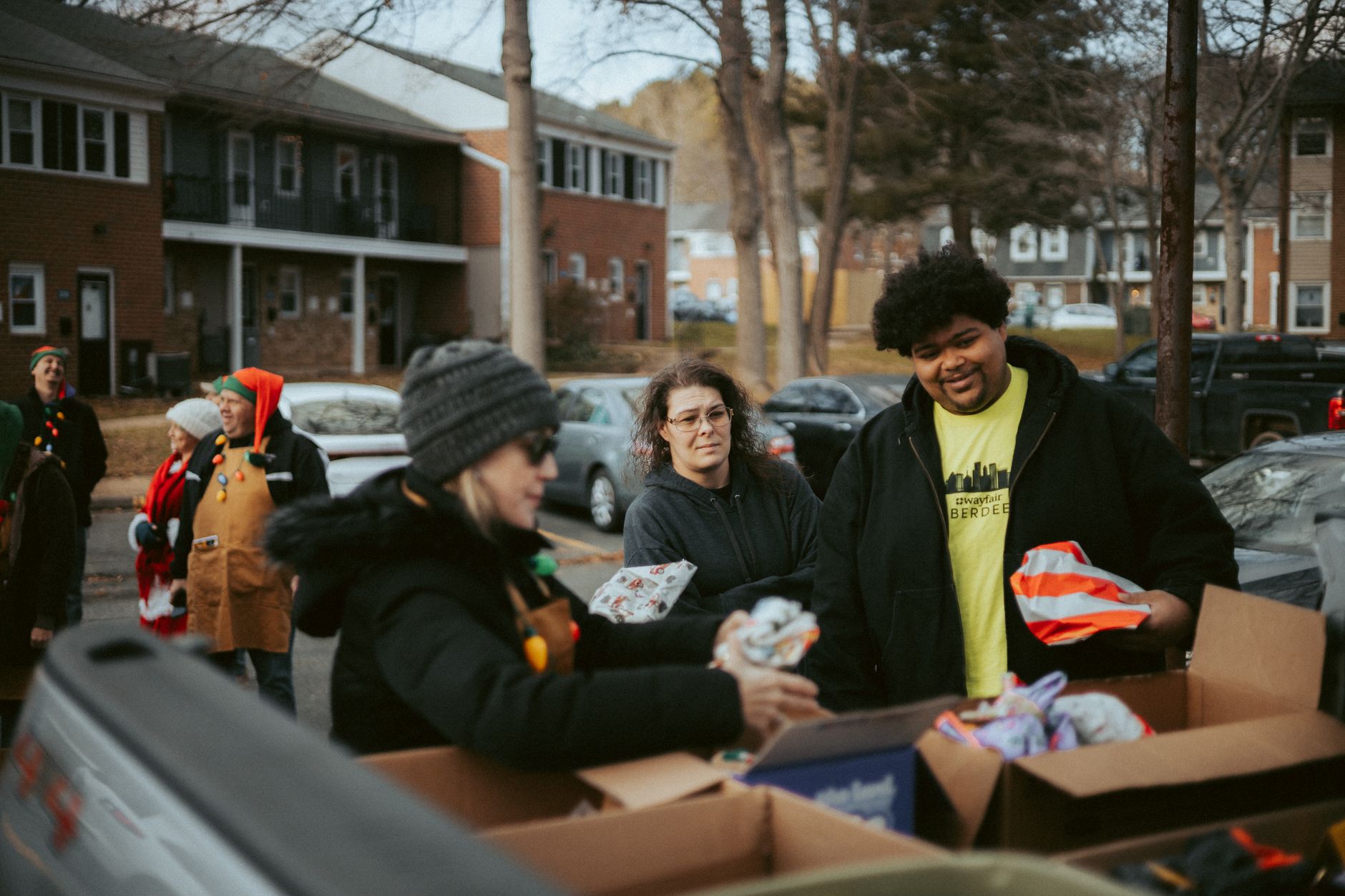
Holiday pantry, feeding families at Thanksgiving and beyond
How our Saturday pantry adapts in November and December, the holiday boxes, the toy drive, and the year-round dignity of consistent service. Plus what we don't do.
-
 Programs
Volunteer culture, how we onboard without burning anyone out
The onboarding, training, and pacing practices that have kept our weekly volunteer bench full for two years, and the ones we have retired.
-
 Programs
Refugee resettlement, a Q&A with our social worker
A practical Q&A on refugee resettlement at mupla: the first 90 days, what helps, what does not, and how to volunteer without overwhelming. With our social worker, Nadia Saleh.